
Background: Why the project is necessary
The drop-out rate of apprenticeships has been a critical education policy indicator for years - also in the Osnabrück region. While it was 7.9% in 2005, it rose to 22% in 2020. Nationwide, it now stands at around 29.5%. Particularly alarming: many apprenticeships are terminated in the first year of training or even during the probationary period.
This development clearly shows how challenging the transition from school to working life has become for many young people - and how important sound preparation, guidance and support are.
Project objective
The Friedel & Gisela Bohnenkamp-Stiftung's "Zukunft.Leben." pilot project supports young people at the Geschwister-Scholl-Oberschule in Bad Laer in the transition from school to vocational training or attending further education courses.
"Zukunft.Leben." aims to enable pupils to make informed, individual and sustainable career choices. In addition, they should be supported as they embark on this new phase of their lives and education in such a way that bad decisions and dropping out of education are avoided as far as possible.
Holistic support for an entire year group
Over the course of the project, the young people in an entire year group are trained and strengthened in various areas. The school's existing career guidance concept forms an important basis and is expanded with additional elements.
A central component is intensive mentoring, which is provided by experienced managers from the region. They accompany small groups of young people individually on their path of personal and professional orientation.
The skills that are to be strengthened at an individual level include
- Self-confidence, self-assurance and self-efficacy
- Motivation and willingness to perform
- Dealing with stress
- reflective handling of media and addictive substances
- Improving language skills
- Knowledge about apprenticeships and secondary schools
- confident appearance in application situations and the preparation of application documents
- Recognizing your own strengths
- social skills and appropriate manners
In addition, the project also focuses on structural and educational policy conditions in order to provide families with the support they need.
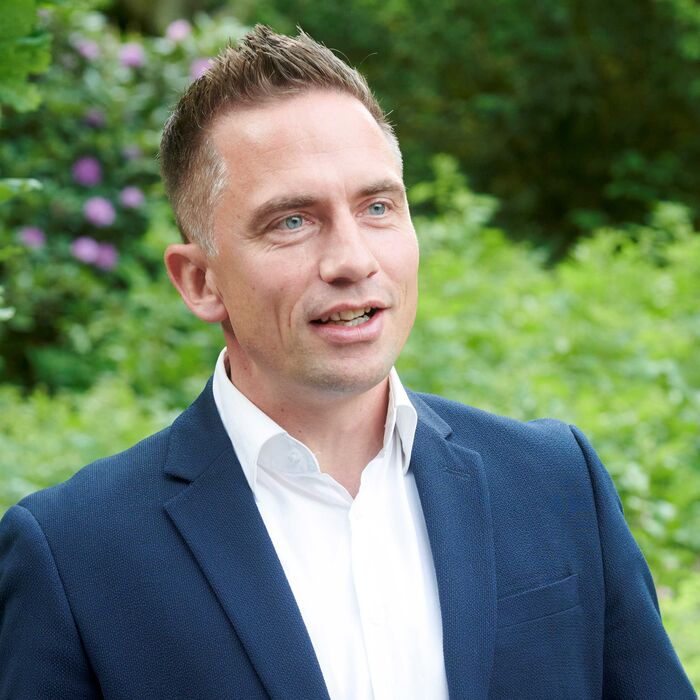
Qualified project management
A project management team with many years of expertise in personnel management and pedagogical school development was appointed for the implementation. The two-member project management team has extensive experience in
- strategic and operational personnel management
- Personnel development, recruiting and labor law
- Organizational and management structures in medium-sized and large companies
This profile is complemented by sound pedagogical skills from:
- School management activities in primary and secondary schools
- Teaching and teaching activities
- participation in school committees and educational policy contexts.
This combination of economic and pedagogical experience forms a strong basis for a project that takes into account both individual support and structural requirements.
Target groups
The direct target groups are pupils in years 8 to 10 and their parents. At the same time, future training companies and secondary schools benefit, as they can offer young people realistic guidance and better starting conditions at an early stage.
Special features of the pilot project
"Future.life." combines educational and economic perspectives in a unique way. An early, close and individual exchange between pupils, parents, school, mentors and companies creates a comprehensive understanding of each other. This shared view of skills, needs and expectations creates the basis for sustainable, long-term successful cooperation - and thus for successful transitions from school to work.