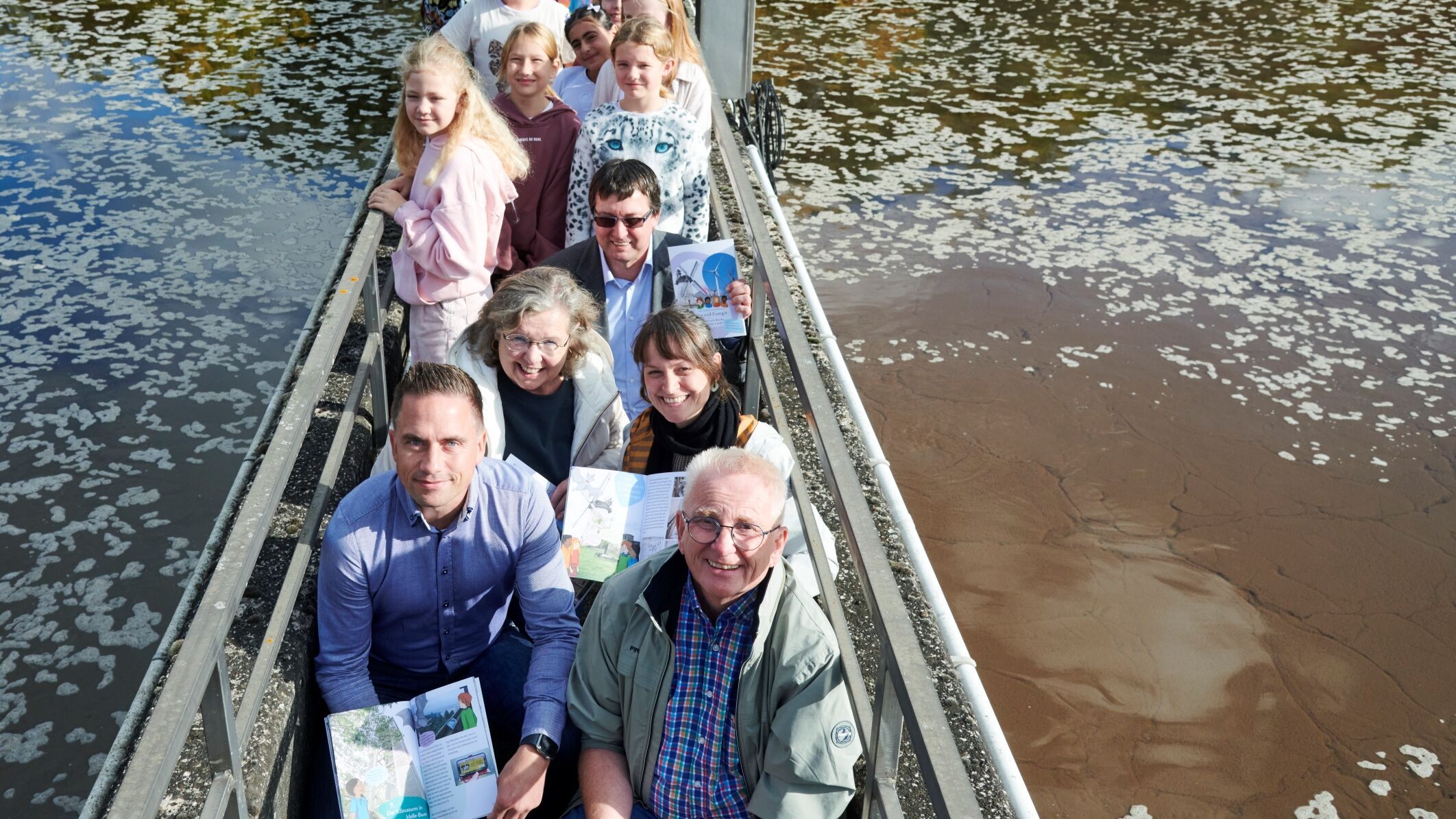
How does a wind turbine work? What can a biogas plant do? And why is the ecosystem of a lake so important for our climate? Questions like these are the focus of the new teaching and reading booklet for fourth-graders, which has been published annually by the Osnabrück district cultural office since 2015. The booklets have long since established themselves as a popular part of subject lessons. They combine local history with exciting topics and give children the opportunity to get to know their region better. The series will be fundamentally renewed for the 2025/26 school year: the upcoming booklet is dedicated to the future topic of climate and energy and will also be modernized in terms of graphics and content.
A series with tradition
Since the first issue "On the way through the Osnabrücker Land", numerous brochures have been published - on museums, archaeology, history and special anniversaries in the district. They all have one thing in common: they bring children closer to their homeland, encourage them to discover it and open up new learning paths. The new booklet will continue this tradition, but will also break new ground in terms of design. Instead of the familiar children's characters Jutta and Benno, four new characters will guide us through the stories in future: Ida, Karl, Tom and Sophie. They are named after personalities with a connection to the district and stand for a contemporary, naturalistic presentation that appeals more to today's children. The popular bat Flatta remains as a connecting element.
Learning in real places
The booklet comprises around 50 pages in a handy A5 format and presents twelve places in the Osnabrück region that are examples of sustainable energy generation and climate awareness. From the Glandorf-Schwege solar park to the Lechtingen windmill and the Haseniederung Biological Station - each chapter combines knowledge with practical examples from the region. All the facilities presented are real places of learning that can be visited by school classes or families. This means that the booklet is not only used in the classroom, but also encourages excursions. Interactive tasks and hands-on elements bring the topics to life and encourage independent learning. Teachers are provided with supplementary material so that they can flexibly integrate the content into their lessons.
Bringing sustainability to life
The aim of the project is to sensitize children to sustainable action at an early age. They should understand how valuable resources are, what opportunities renewable energies offer and how important it is to take responsibility for the future. At the same time, the participating institutions also benefit: They become visible in the brochure, reach school classes and families and come into focus as places to learn and experience.
A benefit for children and the region
With the new teaching and reading booklet on the subject of climate and energy, the Osnabrück district cultural office is continuing its successful series - and making the topics of sustainability, the environment and the future tangible for children. It strengthens identification with the region, conveys knowledge with practical relevance and helps young people to develop an awareness of climate and energy issues. In this way, the booklet combines local history with questions about the future - and makes it clear that sustainability begins in our own living environment. The Friedel & Gisela Bohnenkamp-Stiftung supports the project and thus makes a significant contribution to sensitizing children in the Osnabrück region to sustainability and future issues at an early age.